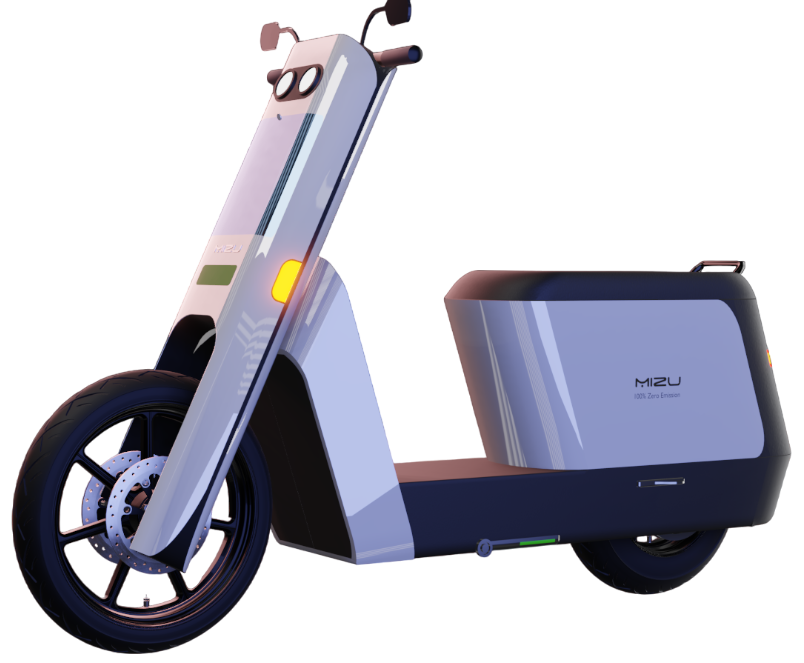
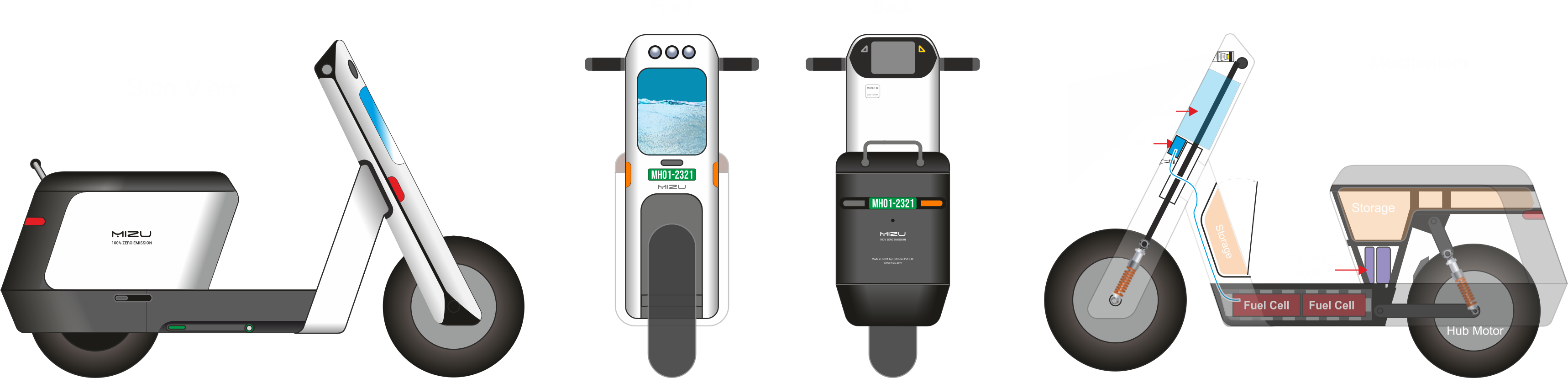
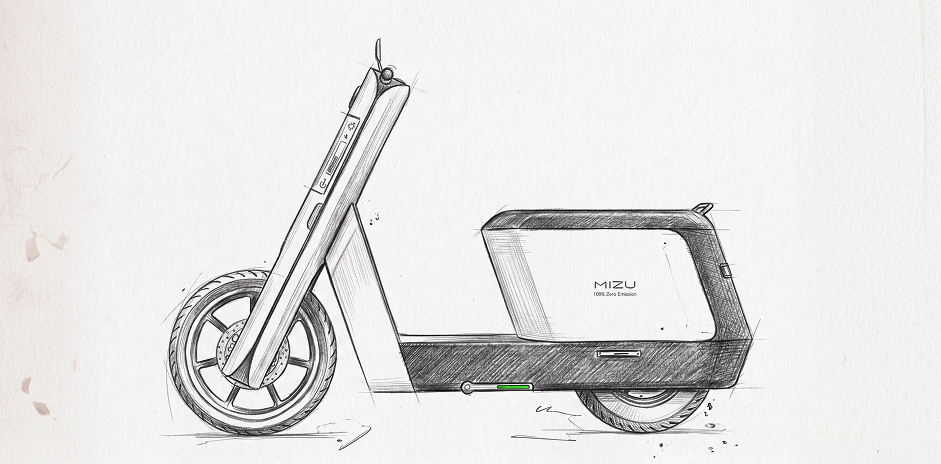
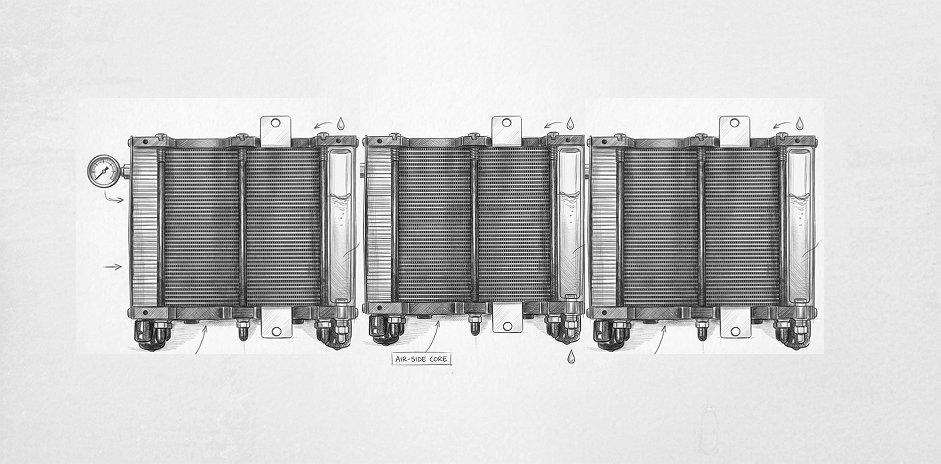
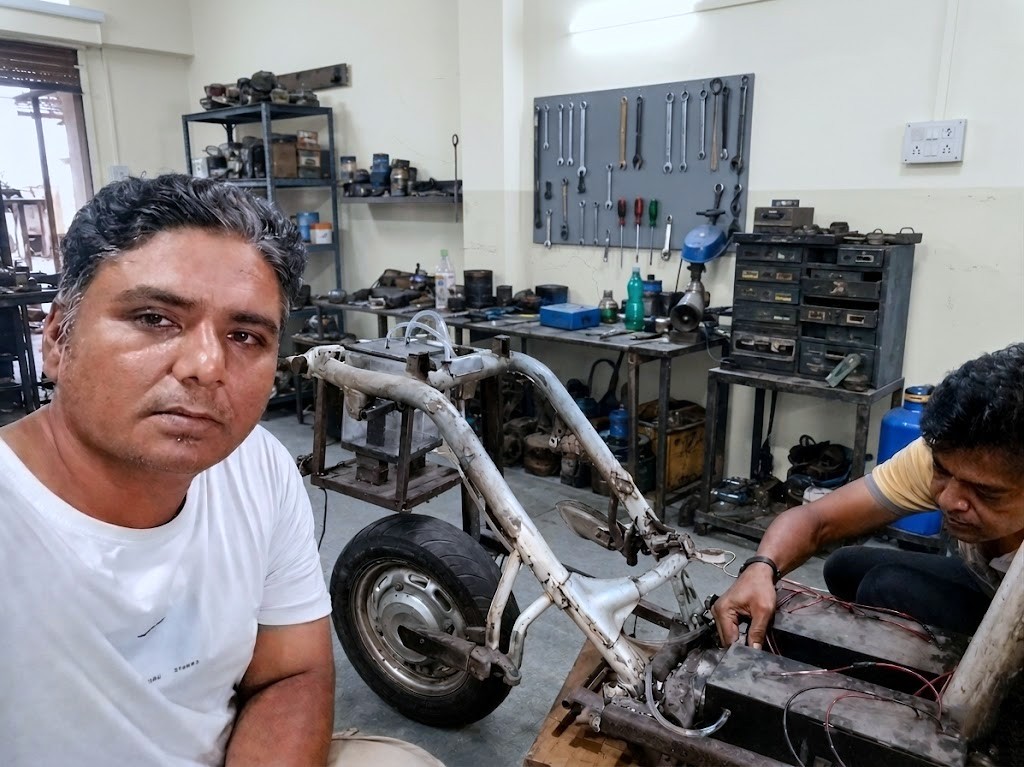
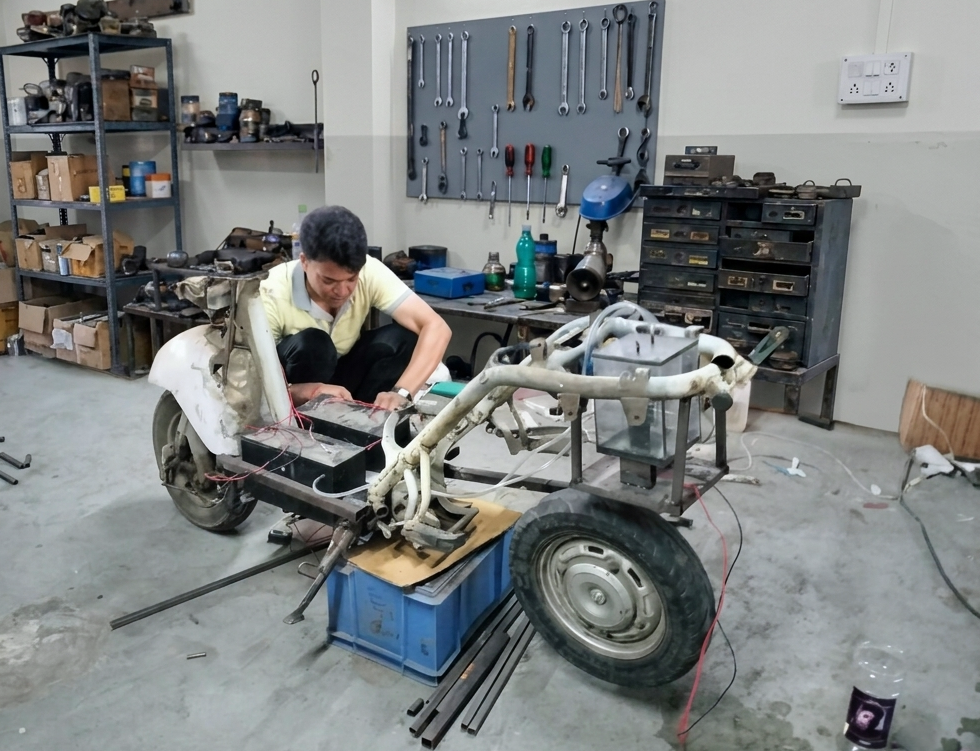
The technology shown is a modular hydrogen energy system that powers our flagship 2-wheeler, Mizu. It uses water-based electrolysis and a fuel cell to generate electricity for the vehicle. Hydrogen is produced through electrolysis, stored/managed, and then supplied to a fuel-cell module, which converts hydrogen into electrical energy to drive the motor.
How it works on a 2-wheeler:
- • Water + Electricity → Hydrogen: An electrolysis unit splits water into Hydrogen (H₂) and Oxygen (O₂) using electrical energy.
- • Hydrogen Supply: The generated H₂ is separated, managed and supplied to the fuel-cell module.
- • Fuel Cell → Electricity: Hydrogen reacts with oxygen inside the fuel cell, producing electricity, heat and water.
- • Motor Drive: The electricity passes through power conditioning and motor control to run the 2-wheeler's electric motor.
- • Water Recovery: Water produced by the fuel cell can potentially be collected and recycled within the system.
- • Modular Design: Components such as the electrolysis unit, gas management, fuel cell, power electronics and motor interface can be independently designed or replaced.
For a 2-Wheeler
The key advantage is that the vehicle can potentially achieve zero tailpipe emissions, with water being the main reaction product at the point of use. The system is designed to be compact, lightweight, scalable and suitable for high-efficiency electric propulsion.